Does United Healthcare Cover TMS and Spravato in New Jersey?
Quick Answer: United Healthcare generally covers both TMS and Spravato for treatment-resistant depression when medical necessity criteria are met, though coverage details vary across its plan types. Elevium Health in Florham Park is in-network with United Healthcare and its Optum-administered plans, and the billing team runs your benefits check and handles prior authorization before treatment is scheduled, so you'll know what's covered before you commit to anything. Ketamine, which is different from Spravato, is generally not covered.
If you have United Healthcare and you're looking at TMS or Spravato, the question on your mind is probably some version of "will my plan actually pay for this." This post covers where United Healthcare typically lands on each treatment in New Jersey, what prior authorization involves, and how Elevium handles the paperwork so you're not the one chasing approvals.
Two things worth understanding first
A couple of points save a lot of confusion later.
"In-network" and "covered" are not the same thing. Elevium being in-network with United Healthcare means the practice has a contracted relationship with the carrier. Whether a specific treatment is paid for is a separate question that depends on your individual plan and on meeting medical necessity criteria. A treatment can be a covered benefit and still require prior authorization before it starts.
United Healthcare plans vary a lot. Coverage can look different across commercial plans, Optum-administered plans, and employer-specific variants. Which treatments need authorization, how many prior medication trials count, and what documentation is required can all shift depending on which United Healthcare plan you actually have. Anything below is directional. We confirm the specifics of your plan at the benefits check.
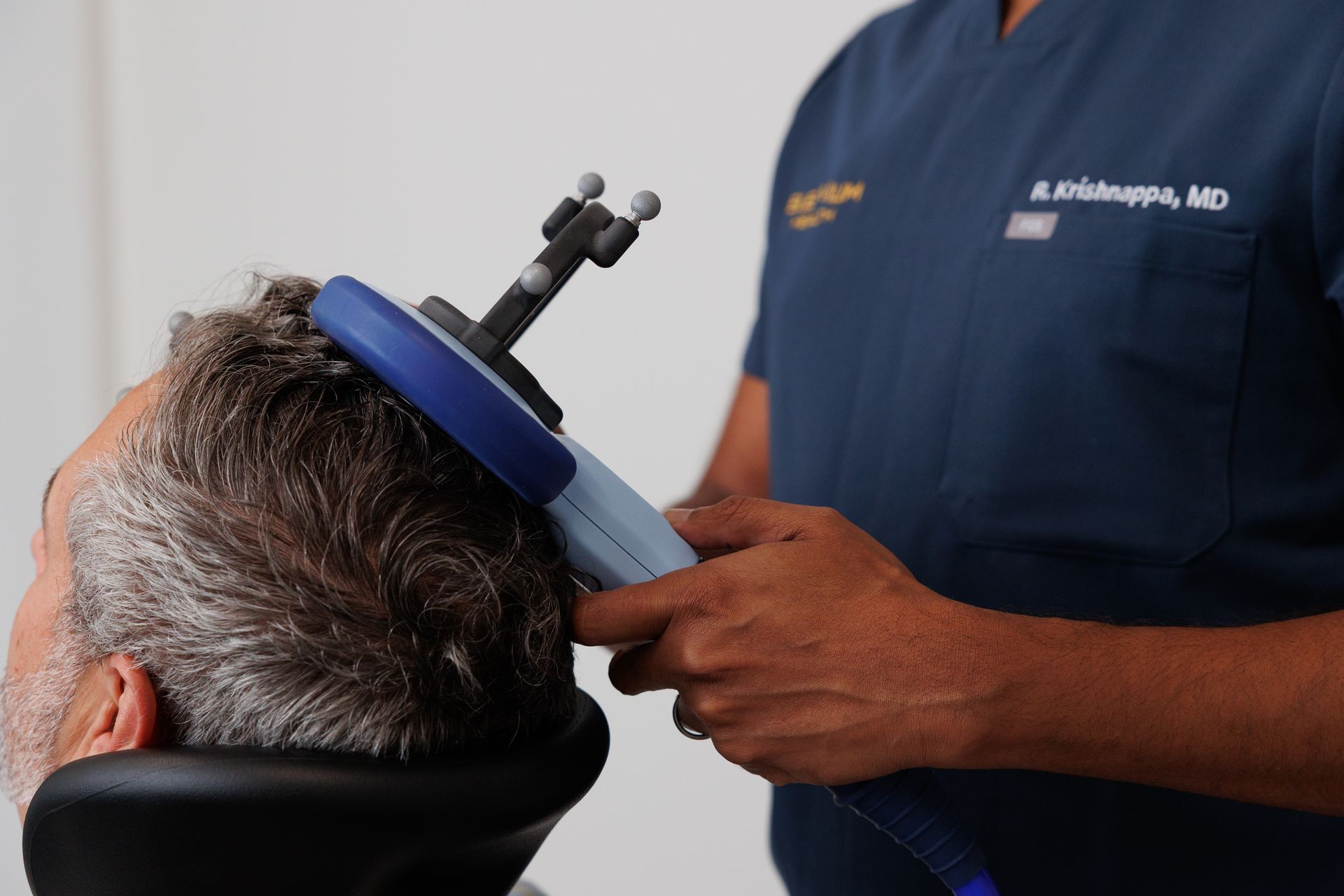
Does United Healthcare cover TMS?
Generally, yes, for treatment-resistant depression. United Healthcare typically follows the standard framework: a documented diagnosis of major depressive disorder, a history of antidepressant trials that didn't work well enough or weren't tolerated, and prior authorization before treatment begins. Like most carriers, United Healthcare also has criteria for what counts as an adequate medication trial, where duration, dose, and adherence all factor in.
TMS for depression is the most commonly covered use. Coverage for TMS for OCD varies more meaningfully across United Healthcare plans. Some cover it under criteria similar to depression, while others require additional review and stronger documentation. If OCD is the reason you're considering TMS, it's worth flagging specifically so we can check that part of your benefits carefully.
Does United Healthcare cover Spravato?
Spravato (esketamine) is FDA-approved for treatment-resistant depression and for major depressive disorder with acute suicidal ideation. United Healthcare generally covers it, but the prior authorization bar is usually higher than for TMS.
Common requirements include a documented MDD diagnosis, a history of failed antidepressant trials, and a concurrent oral antidepressant taken alongside Spravato. That last point is an FDA requirement, not just an insurance rule. Spravato also has to be delivered at a REMS-certified facility, which Elevium is, with a monitoring period after each dose. Where United Healthcare plans tend to differ is in how many prior medication trials they require and how they handle continuation of treatment after the initial phase.

What about ketamine?
Ketamine infusion therapy is distinct from Spravato, and it's generally not covered by United Healthcare or most other carriers, because it's considered off-label for depression. Spravato is the FDA-approved esketamine product and the better-covered option if insurance approval matters to you. Ketamine at Elevium is available as a self-pay treatment for people who choose that route.
What prior authorization actually involves
Prior authorization is United Healthcare's review of whether your treatment meets their medical necessity criteria. The general flow:
- Benefits check. We confirm what your plan covers and what your share of the cost would be, including copay, coinsurance, and deductible. This is free and usually takes a few business days.
- Authorization request. If the treatment is a covered benefit, we submit the request with supporting documentation: diagnosis, medication trial history, current symptoms, and the treatment plan.
- Carrier review. United Healthcare reviews and returns a decision. Standard reviews take longer than urgent ones, and we flag urgency when it's clinically warranted.
- Approval or denial. Approval comes with a set number of sessions authorized and a date range. A denial comes with a reason, which is often something fixable.
- Re-authorization. Some treatment courses need a renewal partway through, and we handle that too.
Most denials we see are fixable. The usual reasons, like incomplete documentation of medication trials or missing evidence of treatment resistance, can often be resolved with a stronger resubmission or a peer-to-peer review, where Dr. Krishnappa or Dr. Rajagopal speaks directly with United Healthcare's medical reviewer.
How Elevium handles this for you
The billing team runs every part of this in-house: the benefits check before you commit, the authorization submission with full clinical documentation, peer-to-peer reviews when they're needed, re-authorizations during longer courses, and appeals when a denial isn't justified. You get the result, and the practice does the chasing.
Frequently Asked Questions
I have United Healthcare, but it's an Optum or employer plan. Does that change things?
It can. United Healthcare administers several plan types, and coverage and authorization pathways can differ between them. Bring your card to the benefits check and we'll confirm exactly how your specific plan works.
Do I have to pay anything before authorization comes through?
For covered treatments, we complete the benefits check and prior authorization before scheduling, so you understand your costs up front. We won't start a covered course before you know where you stand.
What if my treatment is denied?
A denial is usually a starting point, not a dead end. Most are resolved with additional documentation or a peer-to-peer review between one of our psychiatrists and United Healthcare's reviewer. If a denial isn't justified, we appeal it.
What if United Healthcare won't cover it at all?
Self-pay is available for any treatment, and it's the standard route for ketamine, which insurance doesn't cover. If your plan won't approve TMS or Spravato, we can walk you through the self-pay option.
Share Article