What's Involved in a TMS Evaluation and Why It Matters
Quick Answer: A TMS evaluation is the consultation that determines whether TMS is right for you before any treatment begins. At Elevium Health in Florham Park, New Jersey, it covers three things: a clinical assessment of your depression and treatment history, a medical safety screening for contraindications, and an insurance benefits check. It's not the treatment itself — it's the step that confirms you're a candidate, rules out safety risks, and sorts out coverage, so you can make the decision with the full picture in front of you.
If you've been researching TMS, you've probably read plenty about what the sessions are like. The part that gets less attention is the evaluation - the step that actually decides whether you start. It matters more than people expect, because a thorough evaluation is what makes the rest of the process safe, personalized, and far less uncertain. Here's what a comprehensive TMS evaluation involves and why each part is there.
Why the evaluation exists
TMS isn't a first-line treatment, and it isn't right for everyone. The evaluation is how a clinician confirms three things before you commit time, money, or hope to a six-week course:
- Are you a candidate? TMS is used for treatment-resistant depression — typically when antidepressants haven't worked well enough or weren't tolerated. The evaluation confirms the diagnosis and treatment history that make TMS appropriate.
- Is it safe for you? A small number of conditions and implants make TMS unsafe. Screening for them protects you.
- What will it cost? Insurance coverage for TMS depends on meeting specific criteria. The evaluation is where that gets checked, before anything is scheduled.
Skip any of these, and you risk starting a treatment you're not a fit for, weren't safe for, or didn't realize wouldn't be covered. That's why the evaluation is the step that turns a question into a confident decision.
The clinical assessment
This is the core of the visit. One of our psychiatrists builds a complete picture of your mental health and what's brought you here. Expect a real conversation rather than a checklist, covering:
- Your diagnosis and symptoms. When did things start, what does a difficult day look like, and how is depression affecting your daily life. Standardized depression rating scales are often used so progress can be measured objectively later.
- Your treatment history. Which antidepressants have you tried, at what doses, for how long, and why you stopped each? This matters clinically, and it matters for insurance - most carriers want documented evidence that medications were tried before they'll authorize TMS.
- Your goals. What "better" actually looks like for you. This shapes how treatment is planned and how progress is judged.
The honesty of this conversation directly affects the quality of your plan, so it's worth coming prepared (more on that below).

The medical and safety screening
TMS is non-invasive and generally well tolerated, but there are real contraindications, and screening for them is non-negotiable. The main ones:
- Ferromagnetic or magnetic implants in the head or neck. Because TMS uses a magnetic field, certain metal implants near the treatment area can make it unsafe.
- A history of seizures. This is a relative contraindication, not an automatic disqualifier — some people with a seizure history can still be eligible after a thorough evaluation and discussion with one of our doctors.
The screening also reviews your broader medical history to flag anything that could raise the risk of side effects. The goal isn't to find reasons to turn you away - it's to make sure that if you do start, you start safely. Your eligibility is confirmed by one of our physicians, not assumed.
The insurance and coverage check
For most people, cost is part of the decision, and TMS coverage isn't automatic. Carriers generally require a documented MDD diagnosis, a history of failed antidepressant trials, and prior authorization before treatment starts. As part of the evaluation, the billing team runs a benefits check to confirm what your specific plan covers and what your share would be, and handles the prior authorization paperwork. You'll understand the cost picture before you commit to a course rather than after.
Learn More: Insurance Coverage
What happens after the evaluation
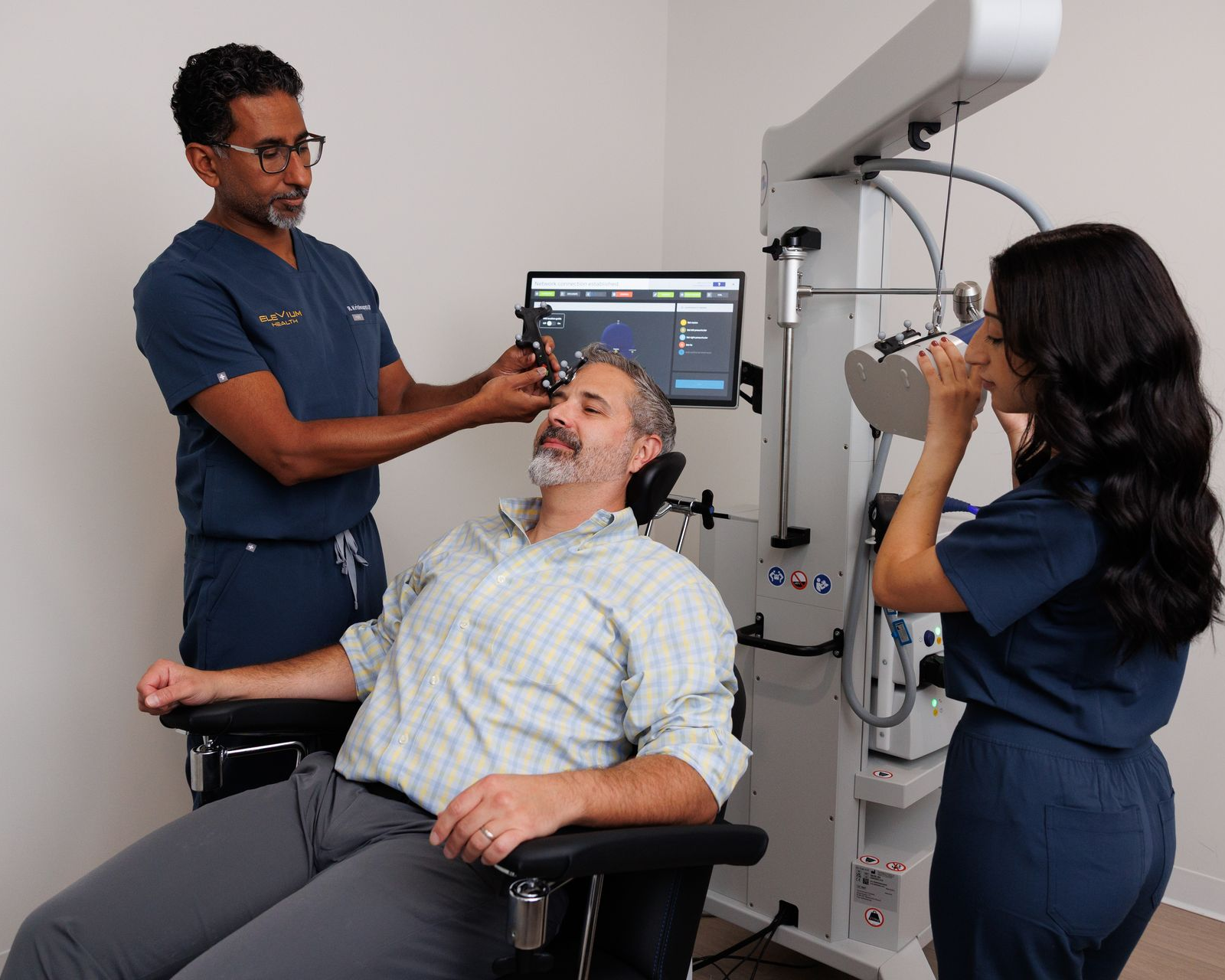
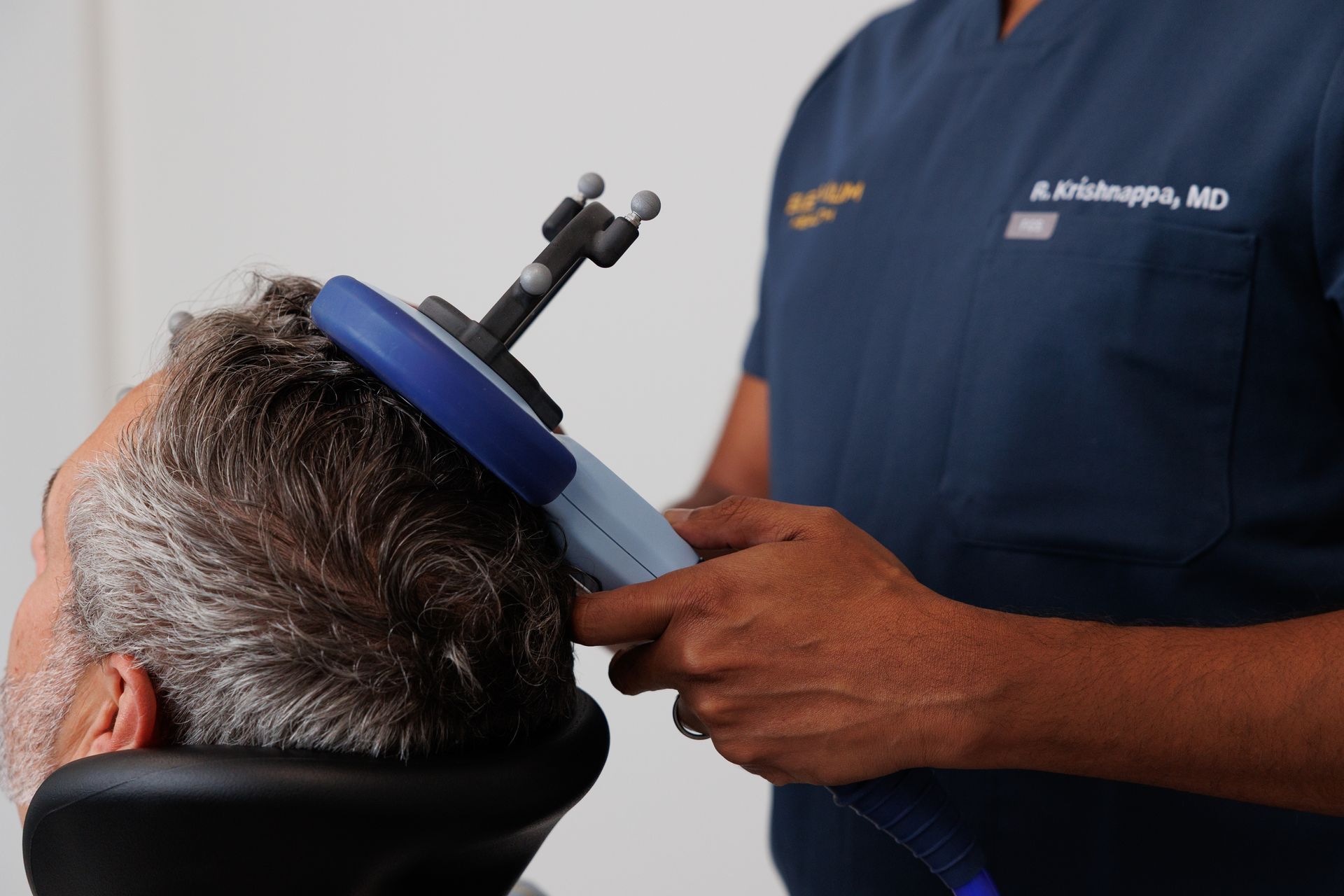
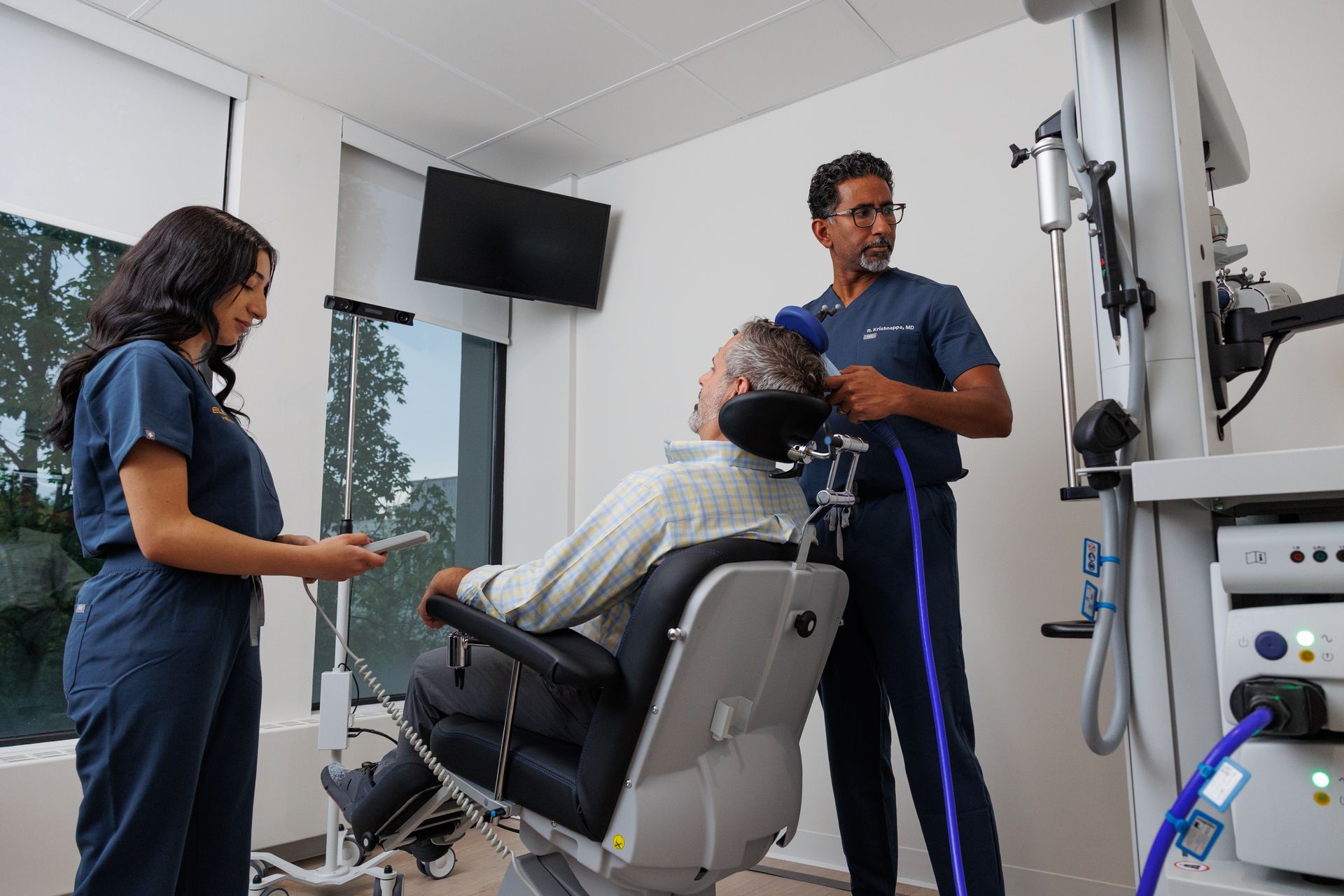
If you're approved and decide to move forward, the first treatment day is separate from the evaluation. It begins with a mapping session: using the Magstim Horizon 3.0 Pro with StimGuide+, the system maps your individual brain structure using external skull landmarks, and one of our physicians confirms the target — the dorsolateral prefrontal cortex, the region involved in mood regulation. The system then tracks that exact location throughout every session that follows.
From there, a standard course runs about six weeks, with sessions roughly 20 minutes each, followed by a short taper. Knowing this sequence in advance is part of what the evaluation gives you: a clear map of what you're saying yes to.
How to prepare for your evaluation
The single most useful thing you can bring is your medication history - a list of every antidepressant you've tried, with doses, dates, and why you stopped each. Pharmacy records or notes from a previous prescriber are ideal if you have them.
Also, bring a list of your current medications and supplements, and your insurance card. If your history is incomplete, don't worry - the clinician will fill gaps in conversation. More detail simply means a faster, more accurate plan.
How long does a TMS evaluation take?
Plan for a standard consultation appointment. It's a conversation plus a safety screening, not a procedure, and you won't receive treatment that day.
Does having the evaluation commit me to TMS?
No. The evaluation exists to help you and the clinician decide together. If TMS isn't the right fit, you'll be told so, and other options can be discussed.
What if the evaluation finds TMS isn't right for me?
That's a useful outcome, not a dead end. Depending on what's found, the conversation may turn to Spravato, medication adjustments, or another path better suited to your situation.
Do I need a referral to be evaluated?
Not necessarily - it depends on your plan. The benefits check during the evaluation will confirm whether your insurance requires one.
Share Article