TMS for Adolescents: A Parent's Guide
Quick Answer: TMS is an FDA-cleared, non-invasive depression treatment for adolescents aged 15 and older when antidepressants haven't worked well enough. For parents, the decision usually comes down to four things: whether your teen meets clinical criteria, how it fits with their current therapist or psychiatrist, what insurance will cover, and what a course actually looks like day-to-day. This guide walks through each.
If you've tried the conventional route — therapy, medication, or both — and your teen still isn't where you'd hoped, TMS is one of the newer options available in New Jersey. At Elevium Health in Florham Park, this guide is for the homework stage, before any decisions get made.
When TMS Becomes a Reasonable Option
TMS isn't usually the first treatment a teen tries. It enters the conversation when standard approaches haven't been enough - typically after at least one antidepressant trial that didn't work well enough or caused side effects your teen couldn't tolerate.
Common situations where families start looking at TMS:
- A teen has been on SSRIs for several months with limited improvement
- Side effects (weight changes, sexual side effects, emotional blunting) are making medication a non-starter
- Your teen is engaged in therapy, but depression is still interfering with school, sleep, or relationships
- You and their psychiatrist want a non-medication option to add to the plan
For adolescents, FDA guidance is that TMS is used alongside antidepressant medication, not as a replacement.
Who Qualifies
The FDA cleared TMS for adolescent depression for ages 15 and older. Practically, eligibility at Elevium depends on:
- Age: 15 or older
- Diagnosis: Major depressive disorder, confirmed by a treating clinician
- Treatment history: Usually a documented trial of at least one antidepressant
- Continuity of care: An existing child and adolescent psychiatrist or therapist who stays involved
- Concurrent medication: Your teen on (or starting) antidepressant medication during the course
- Safety screening: No metal implants in the head or neck, no recent adverse TMS events; history of seizures is a relative contraindication
We don't currently offer psychotherapy or medication management to adolescents at Elevium, so your teen will need an outside therapist or psychiatrist willing to coordinate with our clinical team. Worth confirming that with their current providers before booking.

What a Course of TMS Actually Looks Like
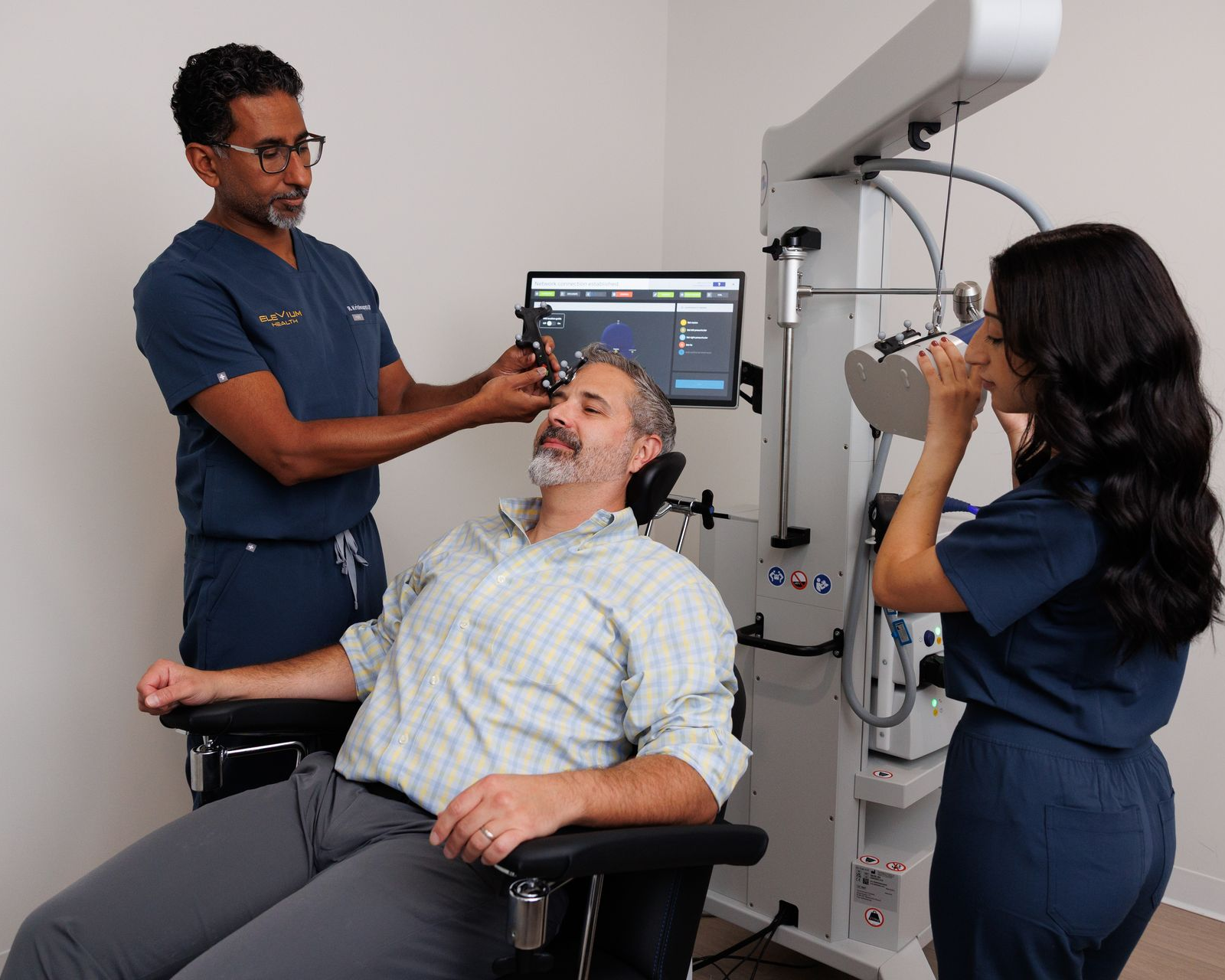
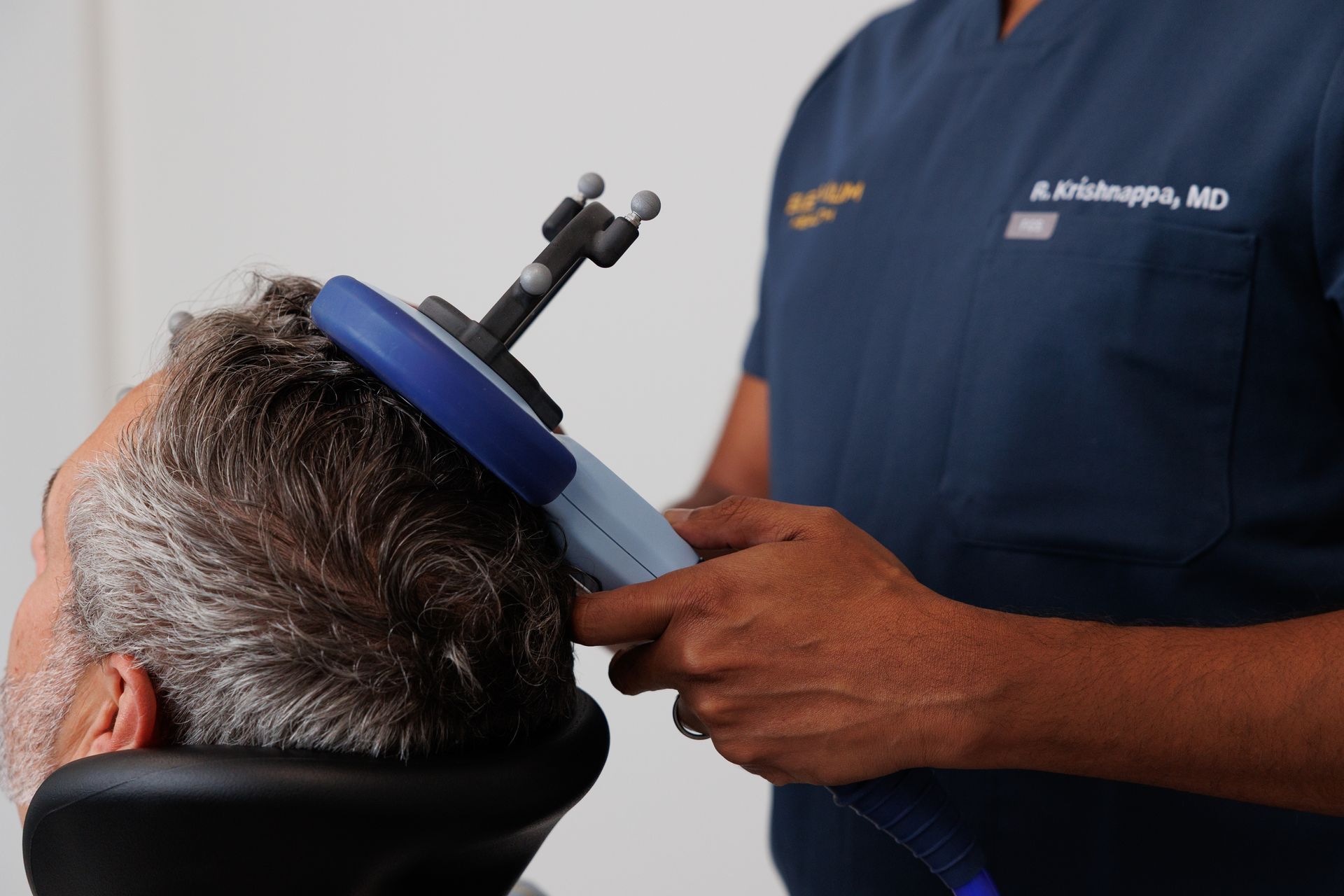
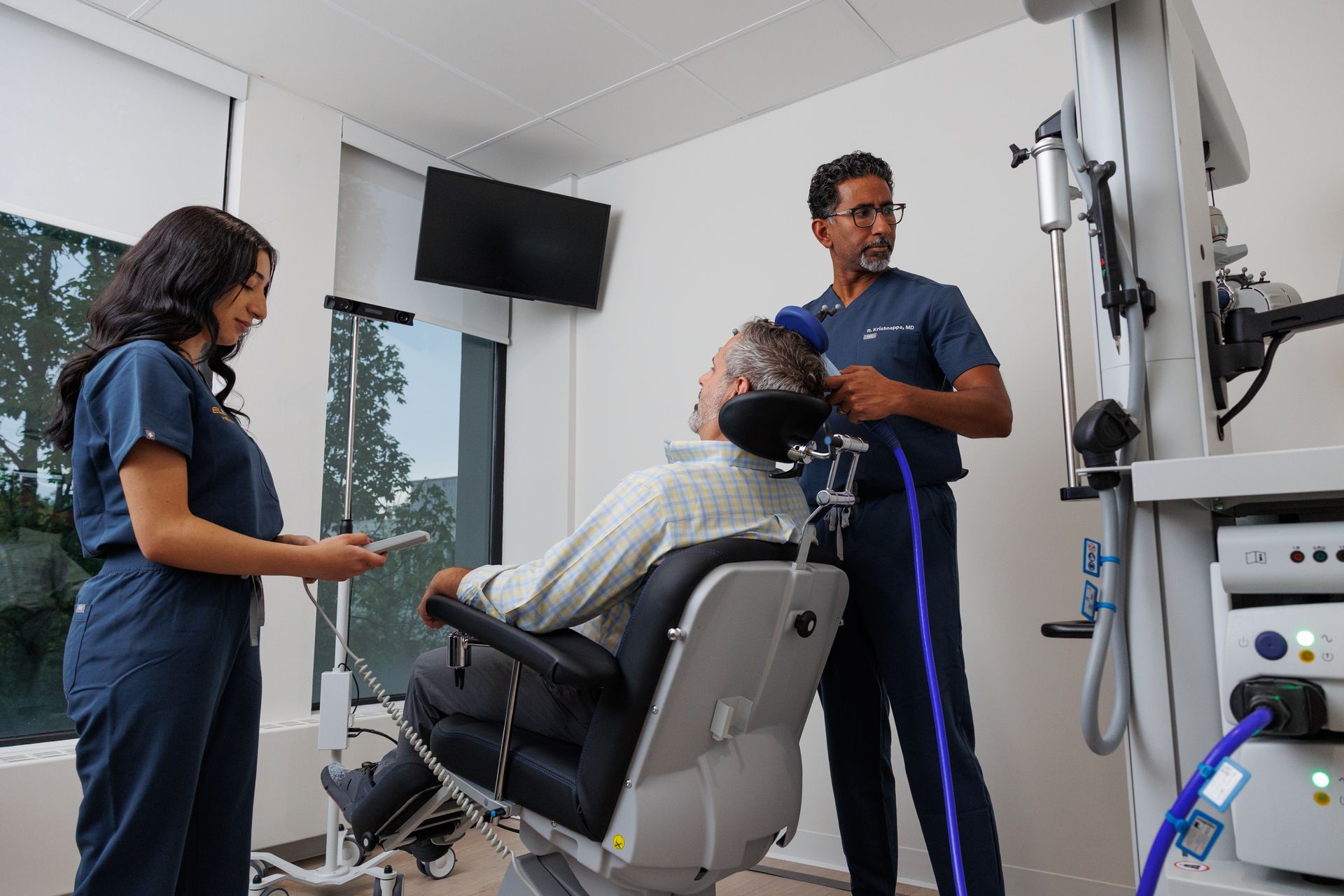
Mapping session (first visit). Your teen is fitted with the device and the treatment area is mapped. We use the Magstim Horizon 3.0 Pro with StimGuide+, which uses neuronavigation to track the exact stimulation point throughout every session. The target for adolescent depression is the dorsolateral prefrontal cortex — a brain region involved in mood, motivation, and executive function.
Daily sessions. A standard course is five sessions a week over about six weeks, followed by a two-to-three-week taper. Each session is around 20 minutes of treatment, with your teen typically in and out within 30. They sit in a chair, awake, on their phone or listening to music. No anesthesia, no recovery time, no driving restriction.
What it feels like. A tapping sensation on the scalp during pulses. Some teens get a mild headache or scalp tenderness in the early sessions; both usually fade within the first week.
Progress checks. Symptoms are tracked through the course using standardized measures, so you and the clinical team can see whether it's working rather than relying on your teen to self-report on a hard day.
How TMS Fits With Therapy and Medication
Alongside, not instead of. TMS works on the neurobiological side; therapy and medication work differently. When TMS works well, it often makes the other treatments more useful, because a teen coming up out of severe depression can actually engage with therapy again.
In practice:
- Therapy continues through TMS and afterward
- Medication continues - for adolescents, this is part of the FDA framework, not optional
- We coordinate with their treating providers about progress
If your teen doesn't currently have a therapist or psychiatrist, we'd ask you to put that in place before starting TMS.
What About Insurance?
Adolescent TMS coverage is expanding but inconsistent. Some New Jersey insurers cover it following the FDA clearance; others don't yet, or require specific prior authorization (number of failed medication trials, current treatment plan documentation).
We work with most major carriers and handle prior authorization for you. The honest answer to whether your specific plan will cover treatment: we won't know until we run the benefits check. That's a free part of the consultation. If insurance doesn't approve, self-pay is an option we can walk through.
Learn More: Insurance coverage
The Conversation With Your Teen
Their buy-in matters. TMS is a daily session for around six weeks, plus a taper. A teen who isn't on board will struggle to stick with it. Most teens we treat were the ones who asked about an alternative to their current meds. If that's not where your teen is yet, a consultation where they can ask their own questions usually lands better than presenting it as a decision made.
It's not "doing something to their brain." No surgery, no anesthesia, no electricity passing through the body, nothing implanted. Showing them a video of an actual session — someone sitting in a chair on their phone — usually does more than any amount of explanation from you.
Consent. Both your consent and your teen's assent are part of the process. Your teen will also have appropriate privacy in their own clinical relationships.
How long until we know if it's working?
Usually gradual. Some teens notice changes within the first couple of weeks; for others it's later in the course or just after it ends. Standardized symptom scales help the clinical team track movement that isn't always obvious day-to-day.
Is TMS safe for a developing brain?
The FDA clearance for adolescent depression was based on safety and efficacy data for this age group. Most common side effects are scalp discomfort and mild headaches in early sessions, both of which resolve quickly. Serious events are rare. Your teen's clinician will review the full safety profile at consultation.
What happens after the course is finished?
Most teens continue with their existing therapy and medication plan. Some respond well and stay in remission for an extended period; others may benefit from maintenance sessions later. It's case by case.
Can my teen miss sessions for school events or vacations?
Some flexibility is possible, but consistency matters. We'll talk through scheduling realistically at consultation so the plan fits your teen's life.
What if TMS doesn't work for our teen?
Not every teen responds. If TMS isn't the right fit, your teen still has their existing care team and other options. We won't push treatment that isn't working.
Share Article