What to Do When Medications and Therapy Aren’t Enough

Quick overview
When evidence-based talk therapy and medication management don’t bring sufficient relief, Elevium offers advanced, clinically proven options that can help many people regain function and hope:
- TMS (Transcranial Magnetic Stimulation) — a non-invasive, FDA-cleared brain-stimulation therapy for depression and certain other conditions.
- Spravato (esketamine) — an FDA-approved, rapidly acting medication for treatment-resistant depression given in-clinic under a REMS safety program.
- Ketamine (IV/IM/compounded intranasal/oral) — an off-label but increasingly used rapid-acting option with a different regulatory and coverage profile than Spravato.
Each has different mechanisms, logistics, evidence levels, and cost/coverage patterns. Below, we explain how they work, who they help, what to expect, and how Elevium integrates them into personalized care.
First step: careful re-evaluation
Before recommending an advanced therapy, Elevium begins with a comprehensive reassessment: review of diagnosis, co-occurring conditions (anxiety, PTSD, bipolar spectrum, substance use), medication history, prior psychotherapy responses, safety (including suicidal risk), medical history, and relevant labs or imaging. This ensures that the chosen option is medically appropriate and that reversible contributors (such as sleep, thyroid, substance, and medication interactions) have been addressed. Elevium’s medication-management and intake workflows emphasize this structured evaluation and shared decision-making.
TMS: how it helps when meds/therapy aren’t enough
How it works
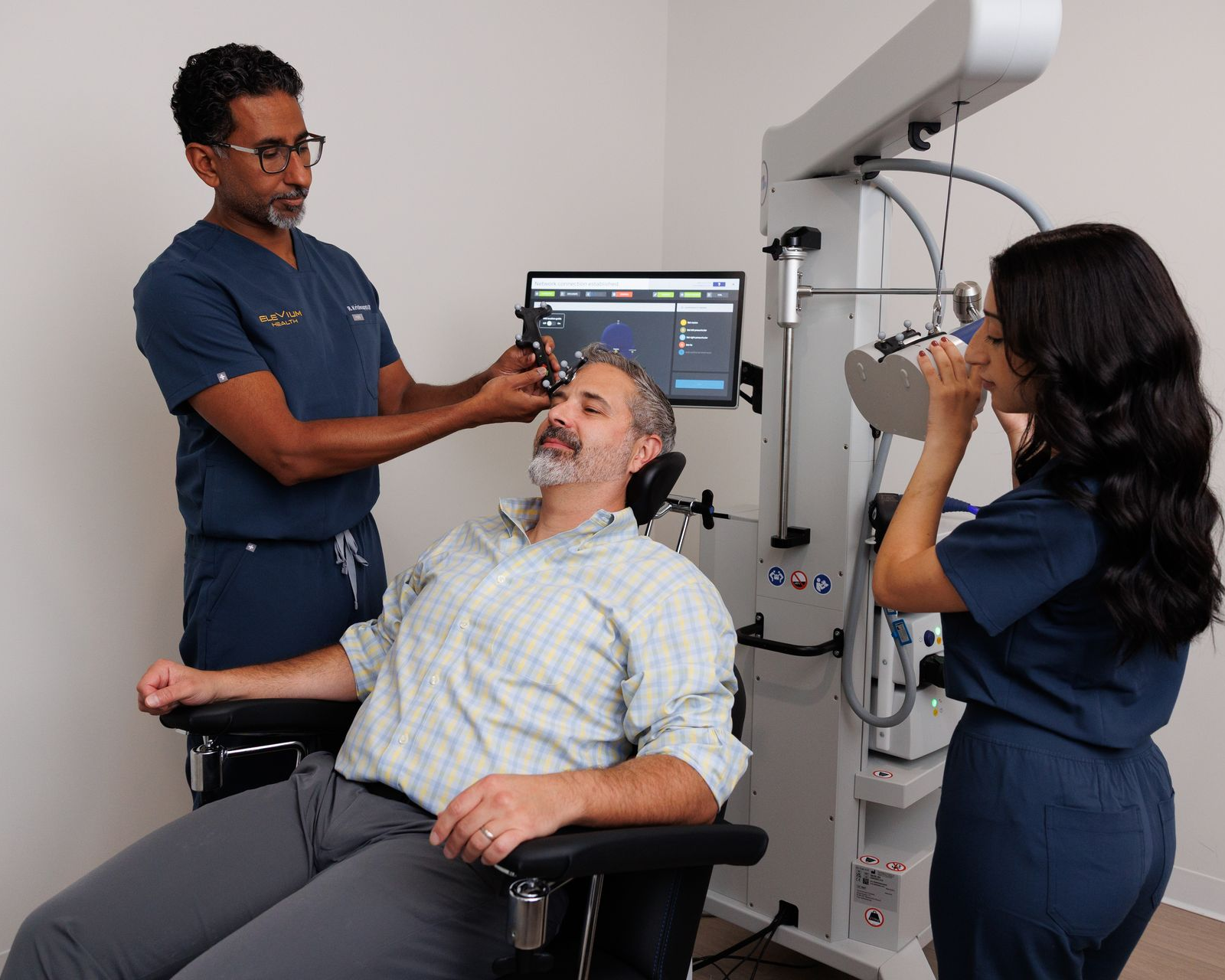
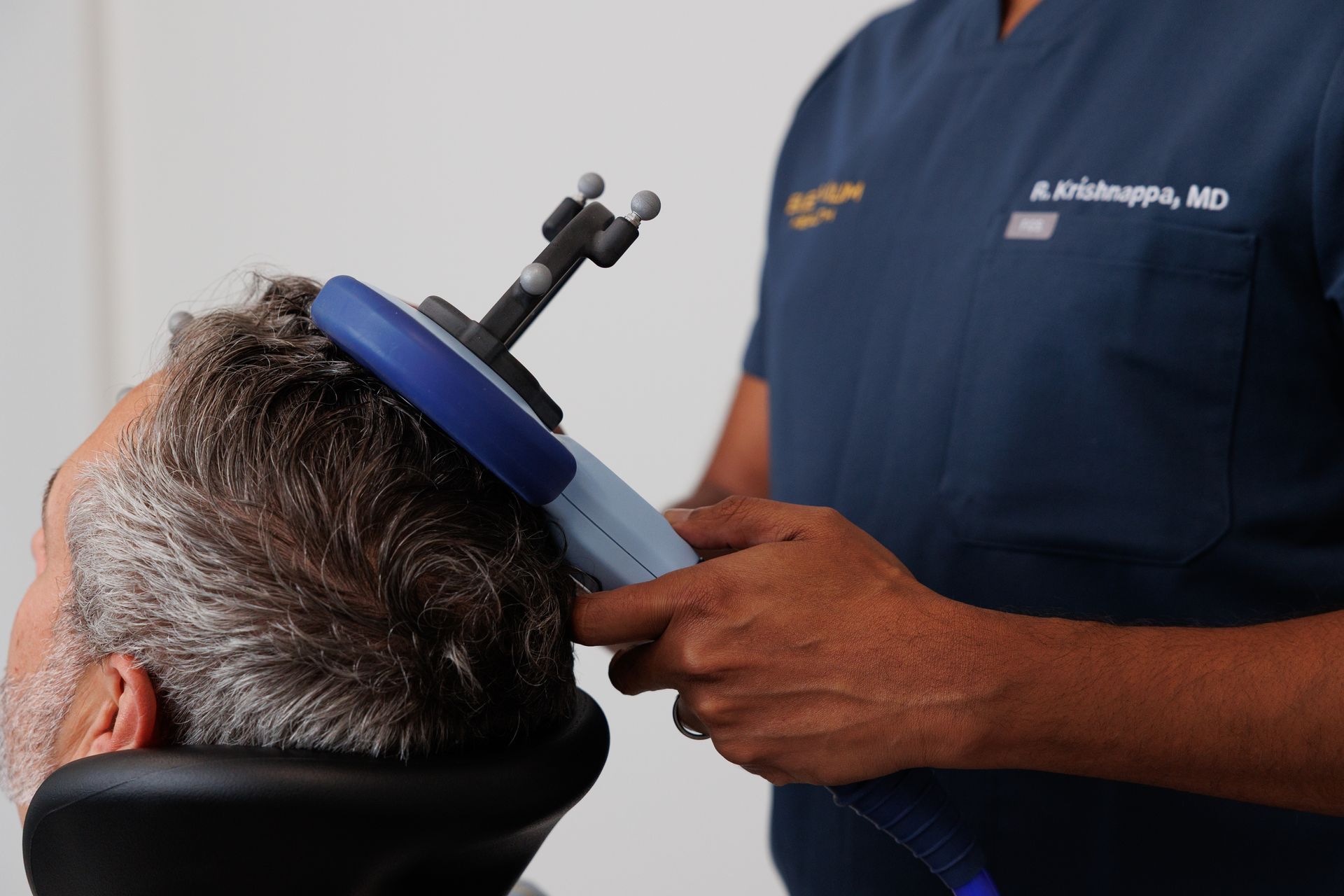
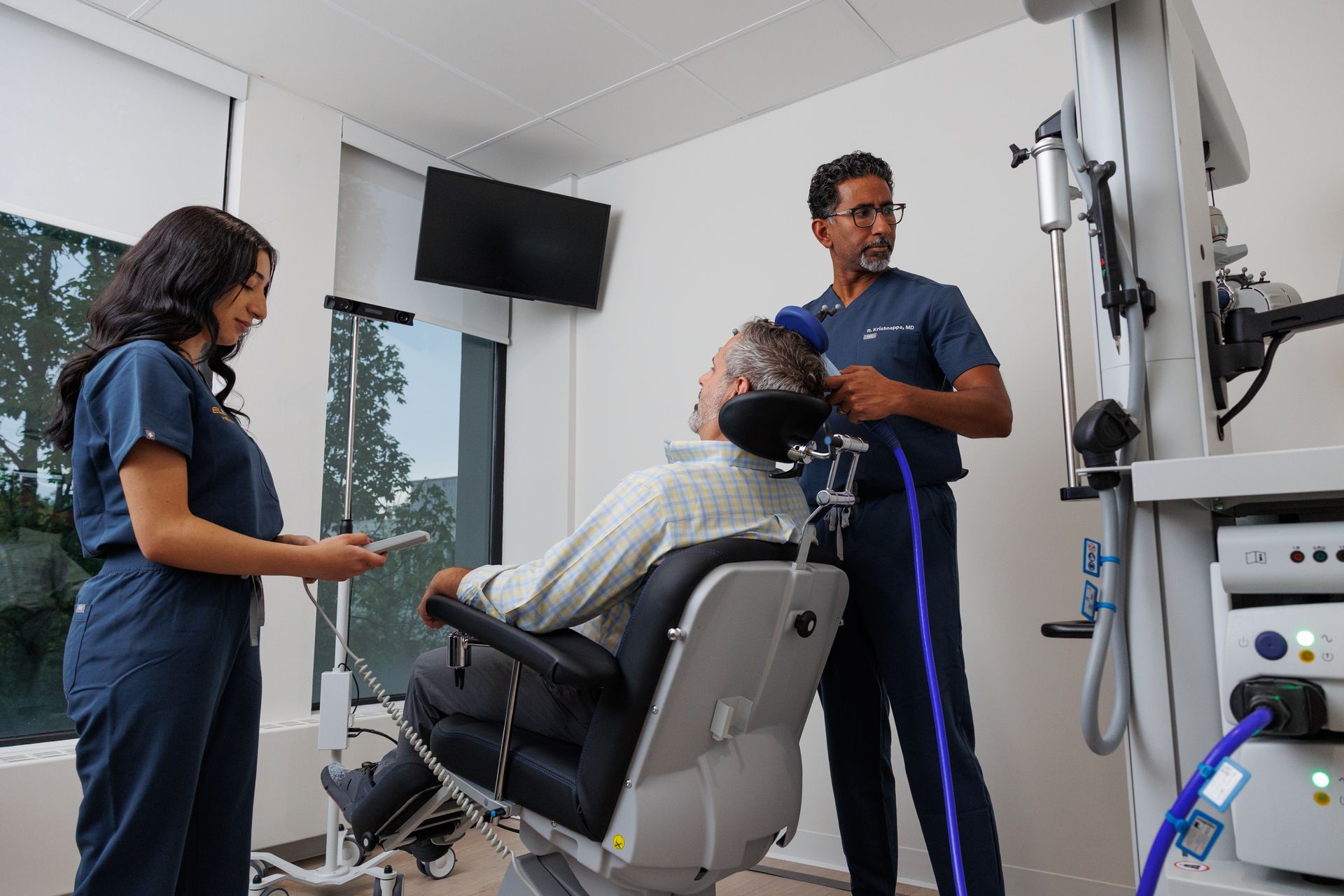
TMS uses focused magnetic pulses to stimulate brain regions involved in mood regulation (commonly the left dorsolateral prefrontal cortex). It is a non-invasive procedure performed while the patient is awake. Evidence shows TMS can significantly reduce depressive symptoms in many patients who have not responded to multiple medication trials.
Who it’s for
- People with treatment-resistant depression (failed adequate trials of antidepressants) or those who can’t tolerate medication side effects.
- Selected patients with OCD or other indications, when supported by the device/protocol and clinical judgment. (Device-specific approvals and local practice guide candidacy.)
What the course looks like
- Intake & screening: psychiatric evaluation, medical history, and motor-threshold titration.
- Typical course: daily sessions (usually 5×/week) for ~4–6 weeks (about 20–30 sessions). Some accelerated protocols (e.g., iTBS) use much shorter sessions.
- During sessions, patients are awake, can read or relax, and usually resume normal activities afterward. Side effects are most commonly scalp discomfort or headache; seizures are rare with proper screening.
Why does it help when meds fail
TMS offers a non-systemic approach that targets neural circuits directly rather than changing neurotransmitter levels systemically. That means patients who did not respond to medication trials sometimes respond to TMS.
Pros/cons summary
- Pros: FDA-cleared, few systemic side effects, durable responses for many.
- Cons: Time commitment (daily visits), potential for scalp pain/headache, insurance often requires prior authorization and documentation of prior treatment failures.

Spravato (esketamine): a regulated, fast-acting option
How it works
Spravato is a nasal esketamine formulation that modulates glutamatergic signaling (NMDA receptor pathway) and can produce rapid antidepressant effects in patients with treatment-resistant depression. Because of safety risks (dissociation, sedation, blood pressure elevation), it is delivered in-clinic under a REMS program with post-dose monitoring.
Who it’s for
Patients who meet FDA-labeled criteria for treatment-resistant depression (typically after multiple failed antidepressant trials) require careful monitoring. Eligibility depends on clinical history and insurer criteria.
What the process looks like at a clinic
- Evaluation & documentation: psychiatric assessment and documentation of prior treatments to support prior authorization.
- Dosing visits: in-clinic dosing with at least 2 hours of observation after administration; vital signs and mental status are
- monitored until the patient is safe to leave.
- Follow-up: regular psychiatric follow-ups to assess response, side effects, and maintenance plans.
Why Spravato when meds fail
Spravato’s regulated, standardized dosing and FDA approval make it a clear option when conventional antidepressants fail, and a rapid response is desirable. Because it’s delivered under REMS, there is a well-defined safety and monitoring structure that many insurers recognize, which can improve the likelihood of coverage (though prior authorization is commonly required).
Pros/cons summary
- Pros: Rapid onset for many patients; FDA-approved pathway and standardized safety procedures.
- Cons: Must be administered and monitored in a clinic (time burden), dissociation and BP changes are possible, and insurance coverage requires documentation/PA.
Ketamine: flexible, rapid, but usually off-label
How it works
Generic ketamine (racemic) acts on glutamate signaling and can produce rapid antidepressant and anti-suicidal effects in many patients. It’s delivered in different forms (IV infusion is the most studied; IM and compounded intranasal/oral formulations are also used). Ketamine for depression is typically off-label, meaning the drug is not FDA-approved for depression specifically (unlike Spravato).
Who it’s for
Patients needing rapid symptom relief or those who have failed multiple conventional treatments. Because it is off-label, candidacy often requires careful informed consent and discussion of costs/coverage.
What a typical ketamine course looks like
- Screening & consent: medical review, substance-use screening, and informed consent for off-label use.
- Dosing: an acute series of infusions (for IV) over 1–2 weeks, followed by maintenance sessions as clinically indicated. Monitoring during and after dosing is routine to manage dissociation and blood-pressure changes.
- Integration: Many clinics recommend psychotherapy and functional support alongside ketamine to consolidate gains.
Why ketamine when meds fail
Ketamine’s speed of effect (sometimes hours to days) makes it an important option for crises or for patients who need quick symptom relief. However, the lack of standardized regulatory approval for depression means insurance coverage is inconsistent, and many patients pay out-of-pocket.
Pros/cons summary
- Pros: Rapid symptom relief for many, flexible administration routes.
- Cons: Off-label - variable insurance coverage; dissociation and transient BP changes; need for repeated maintenance and more research on long-term outcomes.
How Elevium chooses between these options
Decision factors we weigh
- Severity & urgency: suicidal ideation or severe impairment may favor rapid options (ketamine/Spravato under monitored conditions).
- Prior treatment history: number and adequacy of prior antidepressant/psychotherapy trials.
- Medical comorbidity & contraindications: seizure risk, cardiovascular issues, substance-use history, implants (for TMS).
- Logistics & preference: ability to attend daily TMS vs. preference for medication options; tolerance for clinic monitoring/time.
Insurance & cost: Spravato is often covered with prior authorization; ketamine is frequently self-pay; TMS coverage depends on the insurer and documentation. Elevium helps patients navigate benefits checks and prior authorizations.
Typical pathways
- TMS is often recommended when a patient has documented an inadequate response to medication and prefers a non-drug approach.
- Spravato is chosen when a patient meets labeled criteria and seeks a regulated, clinic-based rapid option.
- Ketamine may be offered when rapid relief is needed, and Spravato is not appropriate/available, with full discussion of cost and evidence.
Integration & ongoing care
Advanced treatments are rarely “one and done” — best outcomes come when these options are integrated with psychotherapy, medication management, and functional supports:
- Combine with psychotherapy: many patients do better when TMS/ketamine/Spravato are paired with ongoing evidence-based therapy to consolidate gains.
- Medication coordination: medication regimens may continue or be adjusted during/after advanced treatments. Elevium’s medication-management workflow supports close coordination.
- Maintenance planning: TMS maintenance schedules, Spravato maintenance dosing, or periodic ketamine sessions may be planned based on response.
Safety, monitoring, and practicalities
- TMS: requires pre-treatment screening for seizure risk and metal implants; most side effects are mild and transient.
- Spravato: administered under a REMS program with at least 2 hours of post-dose monitoring for dissociation/sedation and BP changes; prior authorization is routinely required.
- Ketamine: requires monitoring during infusion/dosing for dissociation and BP changes; because its use for depression is off-label, informed consent and careful follow-up are critical.

Insurance & cost realities
- TMS: many insurers cover TMS for treatment-resistant depression with prior authorization and proof of prior medication trials.
- Spravato: often covered when label criteria are met and REMS procedures are followed; still often requires PA.
- Ketamine: commonly considered investigational for depression by payers; many patients pay out-of-pocket.
Elevium helps by performing benefits checks, submitting prior authorizations, and estimating likely out-of-pocket costs.
How fast do these treatments work?
- TMS: many patients notice improvement after 2–4 weeks, with fuller benefit by the end of a standard course.
- Spravato: can act quickly (days to weeks) for many patients.
- Ketamine: often rapid, sometimes within hours to days. Response times vary.
Are these treatments safe?
All carry specific risks and require screening and monitoring. TMS has low systemic risk; Spravato and ketamine require clinic monitoring for dissociation and BP changes. Your clinician will review risks and monitoring plans.
Will insurance cover them?
Coverage varies: TMS and Spravato are frequently covered with prior authorization when criteria are met; ketamine for depression is usually off-label and often self-pay. Elevium performs pre-treatment benefit checks to clarify costs.
Share Article