TMS Therapy Near Me: Your Complete Guide to TMS in New Jersey
A non-drug, non-sedating therapy for depression, OCD, and treatment-resistant conditions, delivered by a psychiatrist-led practice serving Morris, Essex and Union County.
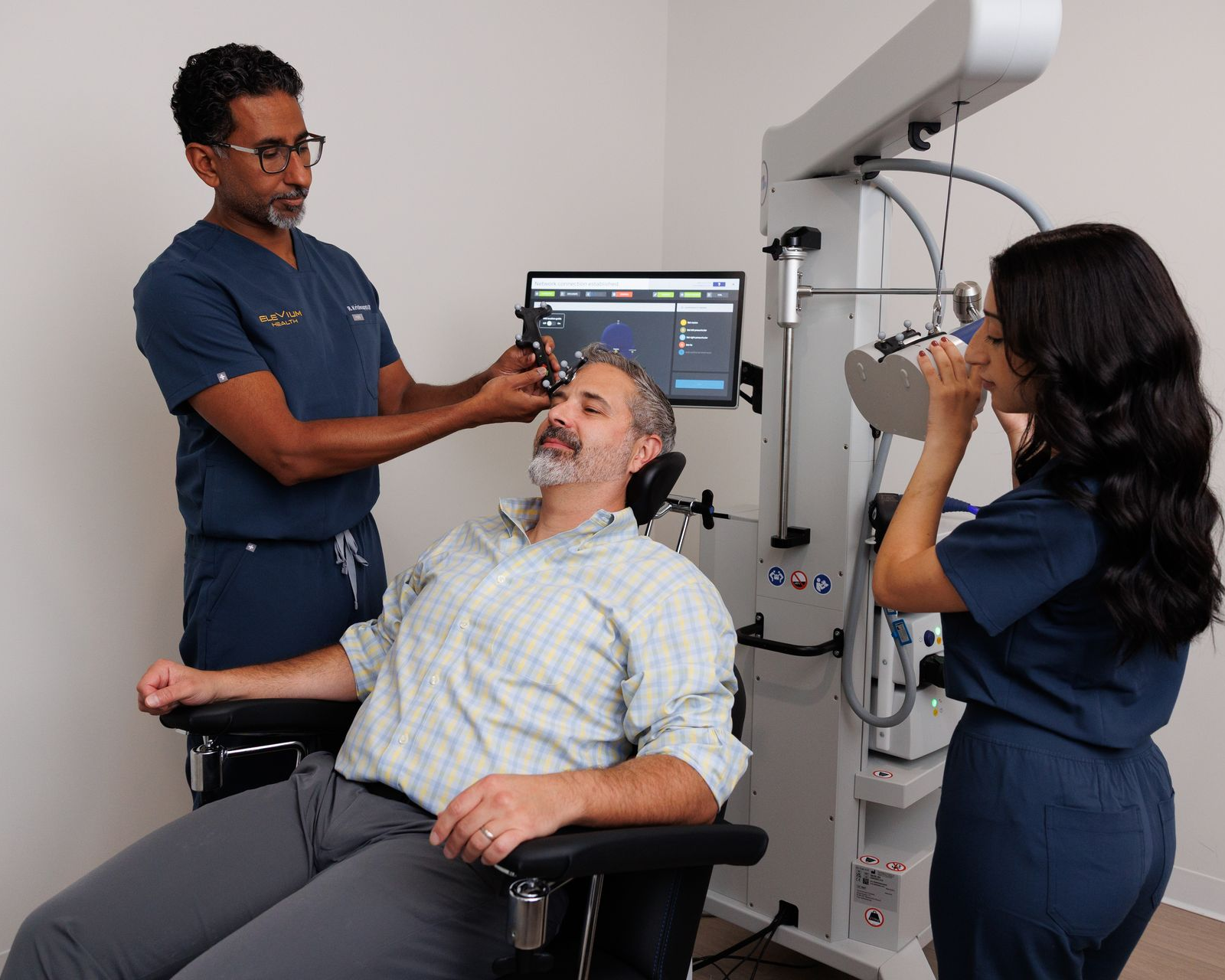
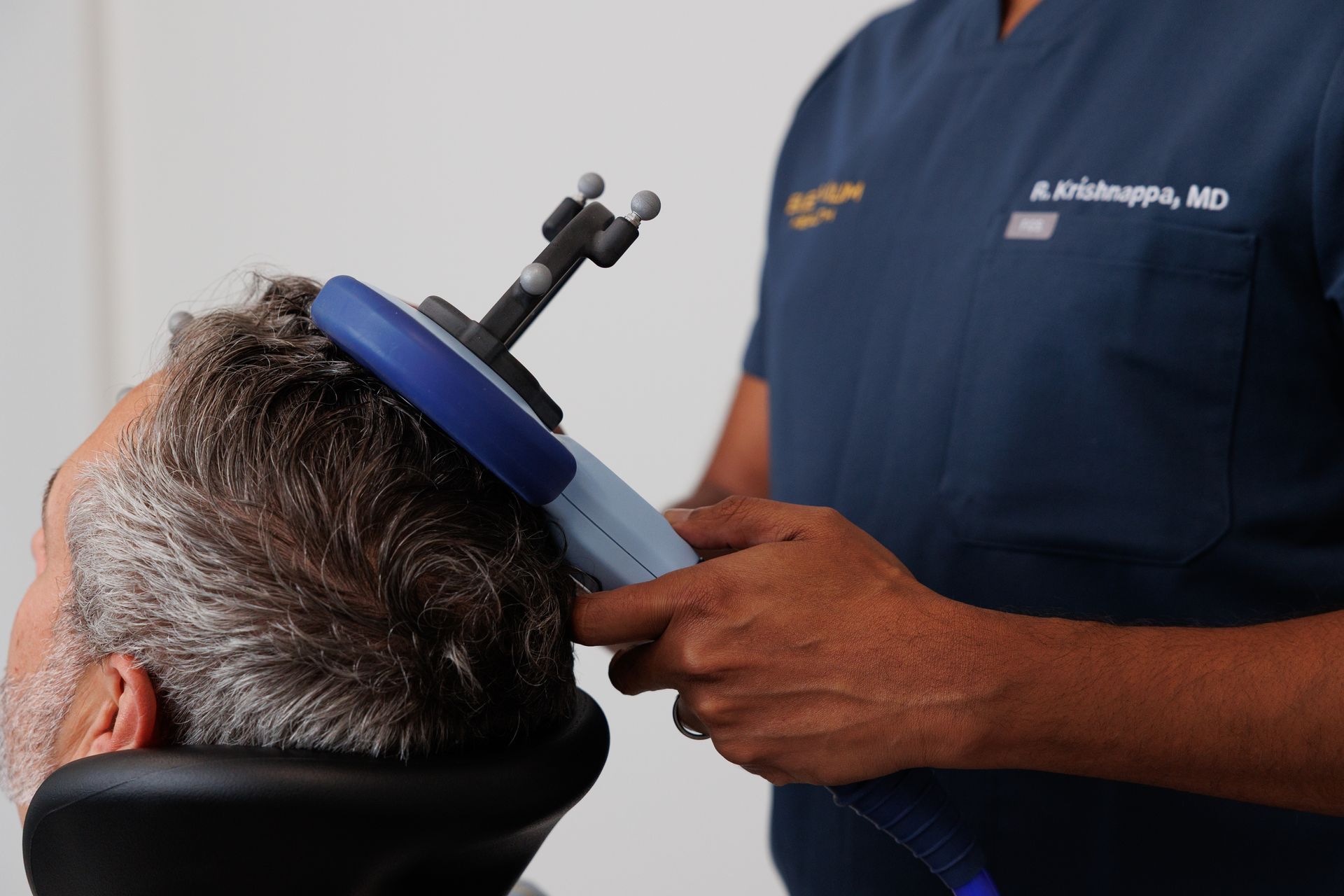
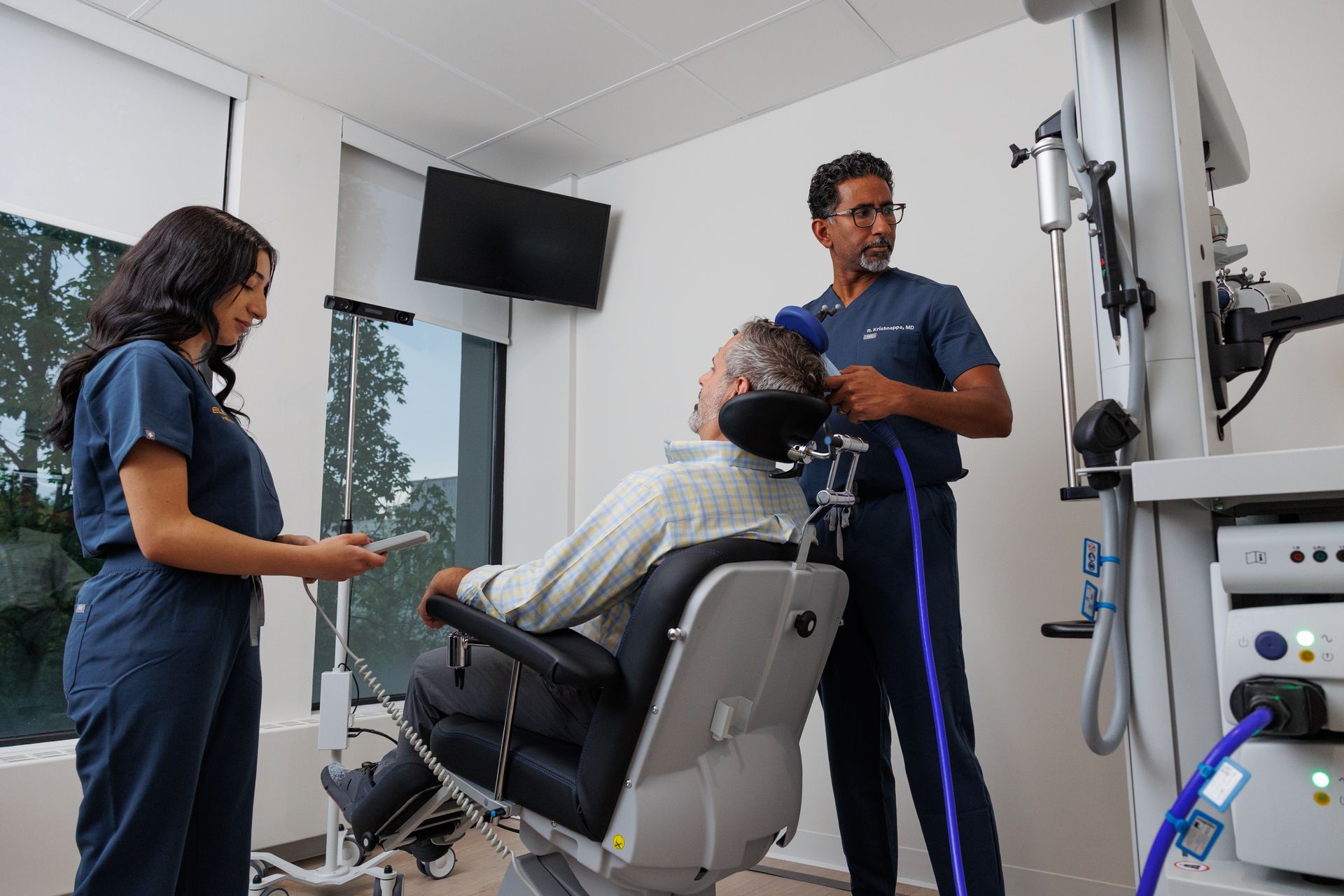
If antidepressants haven't worked, or their side effects have become harder to live with than the depression itself, you have options beyond more medication. Transcranial magnetic stimulation (TMS) uses focused magnetic pulses to gently stimulate the areas of the brain involved in mood, with no drugs entering your system, no sedation, and no recovery time afterward.
At Elevium Health in Florham Park, our clinicians have built TMS care around the people who travel to us from across New Jersey, from Livingston and Summit to Morristown and the surrounding area.
Areas we serve across New Jersey
Our practice is located in
Florham Park, easily reached from Morris, Essex, and Union Counties. Individuals regularly travel to us from:

TMS care, tailored to your condition
TMS is FDA-cleared for major depression and OCD. We tailor the protocol, standard or accelerated, to your diagnosis and schedule.
- TMS for depression - our most common use, for depression that hasn't responded to medication.
- TMS for OCD - a distinct, FDA-cleared protocol.
- TMS for teens - candidacy guided by device labeling and clinical judgment.
- Accelerated TMS - shorter sessions that compress the course.
- ONE-D single-day TMS - investigational and not FDA-approved; offered under careful clinical assessment.
What to expect
- Consultation - a 90-minute evaluation of your history and goals, plus a benefits check.
- Calibration - first sessions set the intensity to your individual motor threshold.
- Your course - typically five days a week. You stay awake and can read or relax.
- Back to your day - no sedation means no downtime; most people drive themselves home.
Choosing a TMS provider in New Jersey
A few things worth checking before you commit, and how we approach each:
- Care led by a board-certified psychiatrist, not delegated to unsupervised staff.
- A genuine evaluation before treatment - we dedicate a full 90 minutes to your first consultation.
- Insurance verified for you up front, with clear costs before anything begins.
- Both standard and accelerated protocols available, so the plan fits your life.
Insurance and cost in New Jersey
Many New Jersey carriers, including Horizon Blue Cross Blue Shield of New Jersey, cover TMS for treatment-resistant depression when prior authorization and documentation of prior medication trials are in place. Criteria vary by plan.
Where coverage isn't available, we offer transparent self-pay pricing and financing. Our team handles the parts that are hard to navigate alone — benefits checks, prior authorizations and itemized estimates.
Where in New Jersey is Elevium located?
In Florham Park, at 30A Vreeland Rd., Ste 304. We care for individuals from across Morris, Essex and Union County.
Does insurance cover TMS in New Jersey?
Many plans, including Horizon BCBS of New Jersey, cover TMS for treatment-resistant depression with prior authorization. Our team runs a benefits check for you first.
How many sessions will I need?
Many plans cover TMS for treatment-resistant depression with prior authorization; check with your insurer and Elevium for a benefits check.
Is TMS painful?
Usually 20 to 30 sessions over four to six weeks. Accelerated protocols compress that. Your clinician tailors it after an evaluation.
Can I drive and work during TMS?
Yes. TMS is non-sedating and needs no anesthesia, so you return to normal activities immediately afterward.
Share Article